Book a stay
Please choose your options...
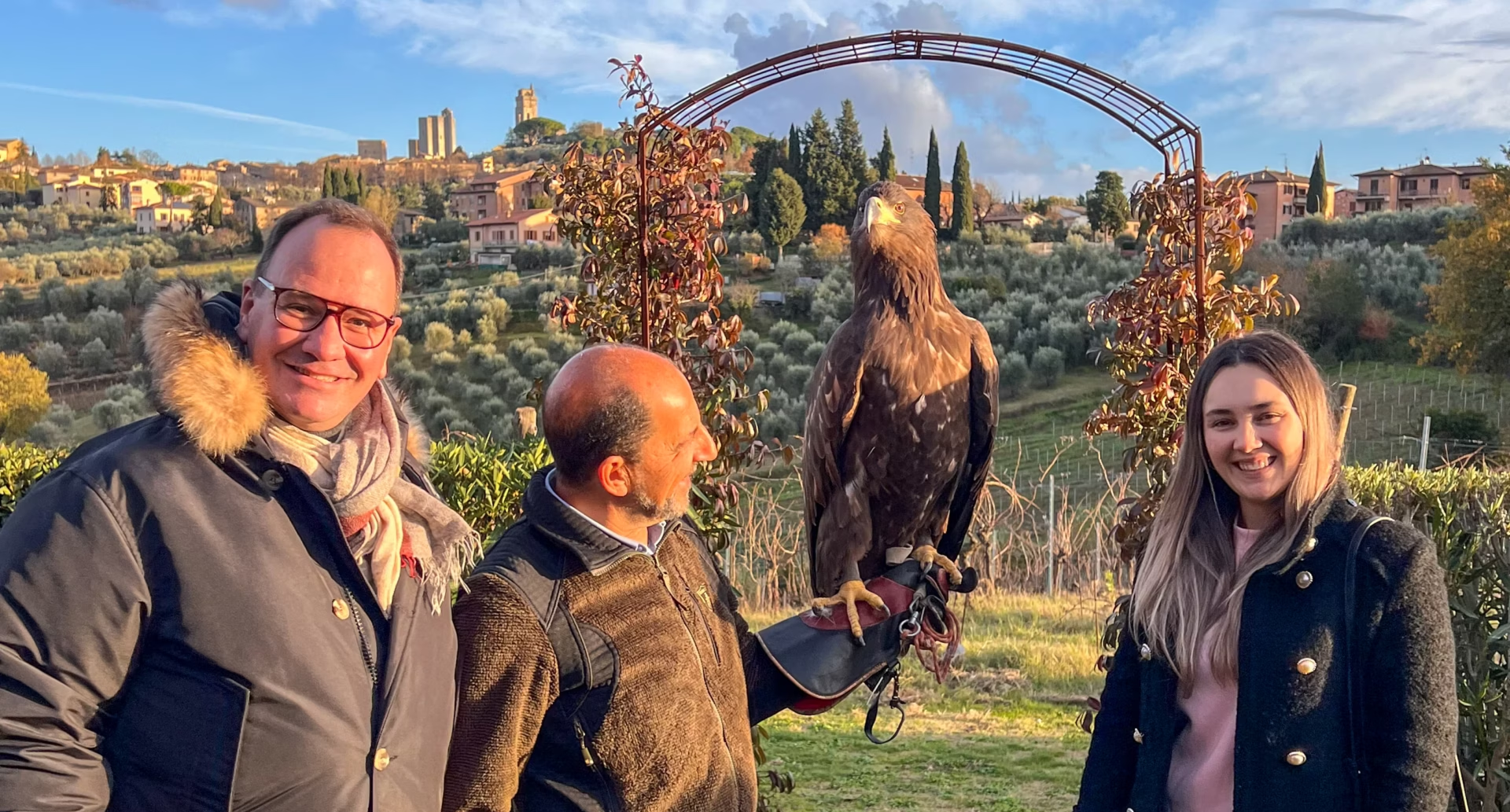
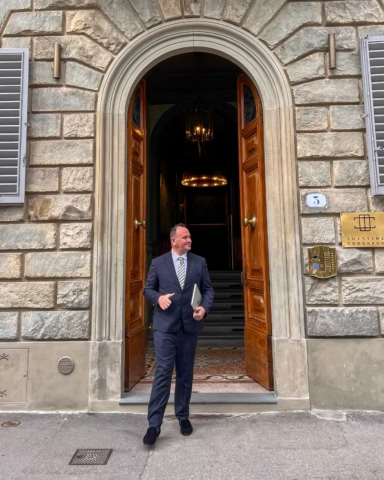
Eric spends his days finding the Florence that doesn’t appear on any itinerary — private openings, craftsmen who don’t advertise, the hour in a space when it belongs to you. We sat down with him at the height of the summer season, when the city is doing its best to empty out and find itself again.
Q1. The first few hours with a guest set the tone for everything that follows. What do you do in that time — and what are you trying to undo?
From the moment someone walks through the door, before much has been said, you can already pick up a great deal of their story — what they are curious about, how they want to be guided, what they actually need from a stay rather than what they think they need. Hospitality is a form of emotional intelligence more than anything else. The first few hours are less about showing people things and more about learning who you are showing them to.
Q2. The Oltrarno has a different relationship to Florence than the rest of the city. How do you describe that difference to someone who has only ever been north of the Arno?
The Oltrarno has a completely different energy from the rest of Florence — younger, less performed, more artisan. The markets around Piazza Santo Spirito and San Frediano feel like neighbourhoods that haven’t decided to be destinations yet, which is exactly what makes them worth being in. I go for Negronis at Hotel Palazzo Guardagni, dinner at Cucculia — Roberta and Oliver’s place — and in summer evenings I head to the Serre Torrigiani with friends: almost no tourists, entirely local, the kind of place that doesn’t show up on any list because it doesn’t need to.
Q3. Florence is largely experienced indoors — behind museum glass, inside churches, in front of art made to be contemplated in stillness. But the city is also lived at street level, in markets, bars and neighbourhood routines that guests rarely find. How do you make sure they do?
Every day we share updated information with the guest — special openings, market days, gallery inaugurations, things that happen once and aren’t widely announced. This is a significant part of the work: not just recommending what already exists in any guidebook, but tracking what is actually happening in the city on any given week. The concept is straightforward — to let guests explore the real Italy rather than the version of it that has been arranged for visitors.
Q4. Florence carries a very specific weight of expectation. Most people arrive having already decided what it is. At what point does that picture start to break open, and what usually breaks it?
Most people arrive with a Renaissance postcard in their mind — museums, famous piazzas, a city frozen in time. What usually breaks that picture is not another monument but a moment of ordinary life in our neighbourhood, Le Cure: a conversation with a barista whose family has run the same bar for three generations, an evening walk across the river when the crowds have gone, a long lunch where nobody seems to be in any hurry to leave. It tends to happen on the third or fourth day. Guests stop trying to see Florence and begin to live in it — they develop a favourite coffee bar, recognize familiar faces, return to the same restaurant. The city becomes smaller and more personal. That is usually when the postcard breaks open.
Q5. Is there something in Florence — a gesture, a detail, a habit of the city — that you have been noticing for years and that still strikes you as the most honest thing about this place?
Guests often arrive with a checklist of masterpieces. But Florence only becomes genuinely interesting once you start paying attention to the ordinary things — where people buy bread, who occupies the same bench every afternoon, how entire conversations happen across a narrow street. I walk and find new things every time. The place I keep returning to is Forte Belvedere — almost always empty, and the best view over the city by some distance. This year the fortress opens on the feast day of the city’s patron saint, San Giovanni Battista, on the 24th of June. For anyone who is here that day, it is not to be missed.
We publish a newsletter every month. Subscribe to receive the next one.
Last modified: Mon, Aug 3, '26