Book a stay
Please choose your options...
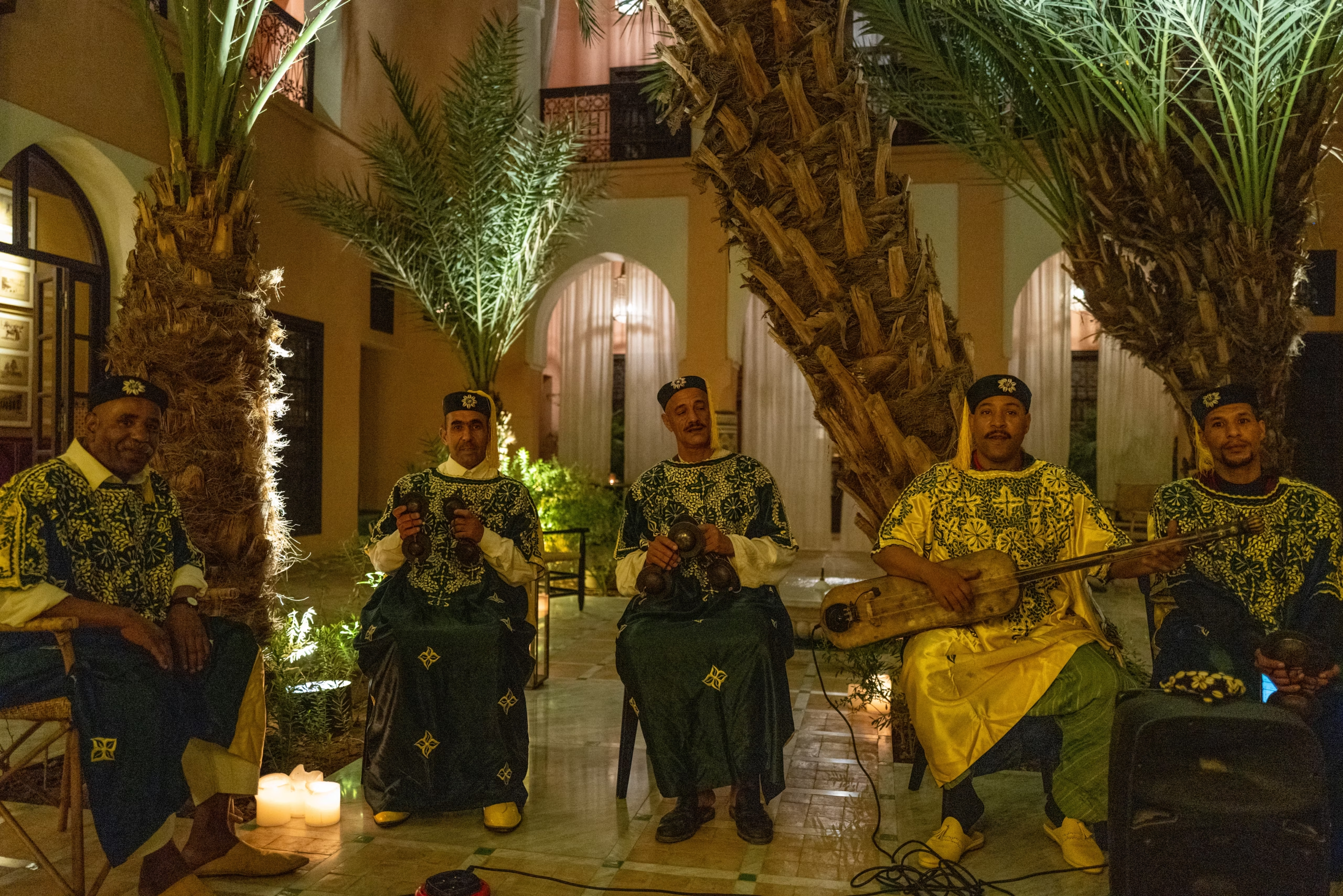
Private introductions through Youssef.

The music you hear late at night in the medina — the metal castanets, the low resonant guembri bass, the call-and-response that can run for hours — is not entertainment. It is ritual. The gnawa are one of the oldest communities in Morocco, descendants of sub-Saharan African slaves brought here between the eleventh and nineteenth centuries from Mali, Senegal, Guinea and Sudan. They brought with them spiritual practices from their home cultures that survived the crossing of the Sahara and were absorbed, over centuries, into a specifically Moroccan form.
What emerged is a syncretic tradition — Islamic in its language and framework, African in its music and cosmology. The gnawa believe in a world populated by spirits, the mlouk, each associated with a specific colour, a specific music and a specific purpose. The Lila — the healing ceremony — is a night-long ritual in which a maalem uses music and colour and incense to call the relevant spirit and establish a therapeutic relationship between that spirit and the person who needs healing. The ceremony can last until dawn. It is not theatre.
The music you hear late at night in the medina is not entertainment.
It is ritual — a thousand years of spiritual practice, still living, still working,
largely invisible to those who pass through.
The guembri — the three-stringed bass lute at the centre of gnawa music — produces a sound with no real equivalent in Western musical tradition: low, resonant, slightly percussive, hypnotic in a way that the word hypnotic barely covers. The Brotherhood houses — the zaouias — are where gnawa musicians gather, practise and maintain the tradition. They are not open to casual visitors, but an introduction through the right person opens the right door. Youssef knows who to approach and what the appropriate etiquette is. The encounter, when it happens, is not one that guests tend to forget.
We publish a newsletter every month. Subscribe to receive the next one.
Last modified: Wed, Aug 5, '26