Book a stay
Please choose your options...
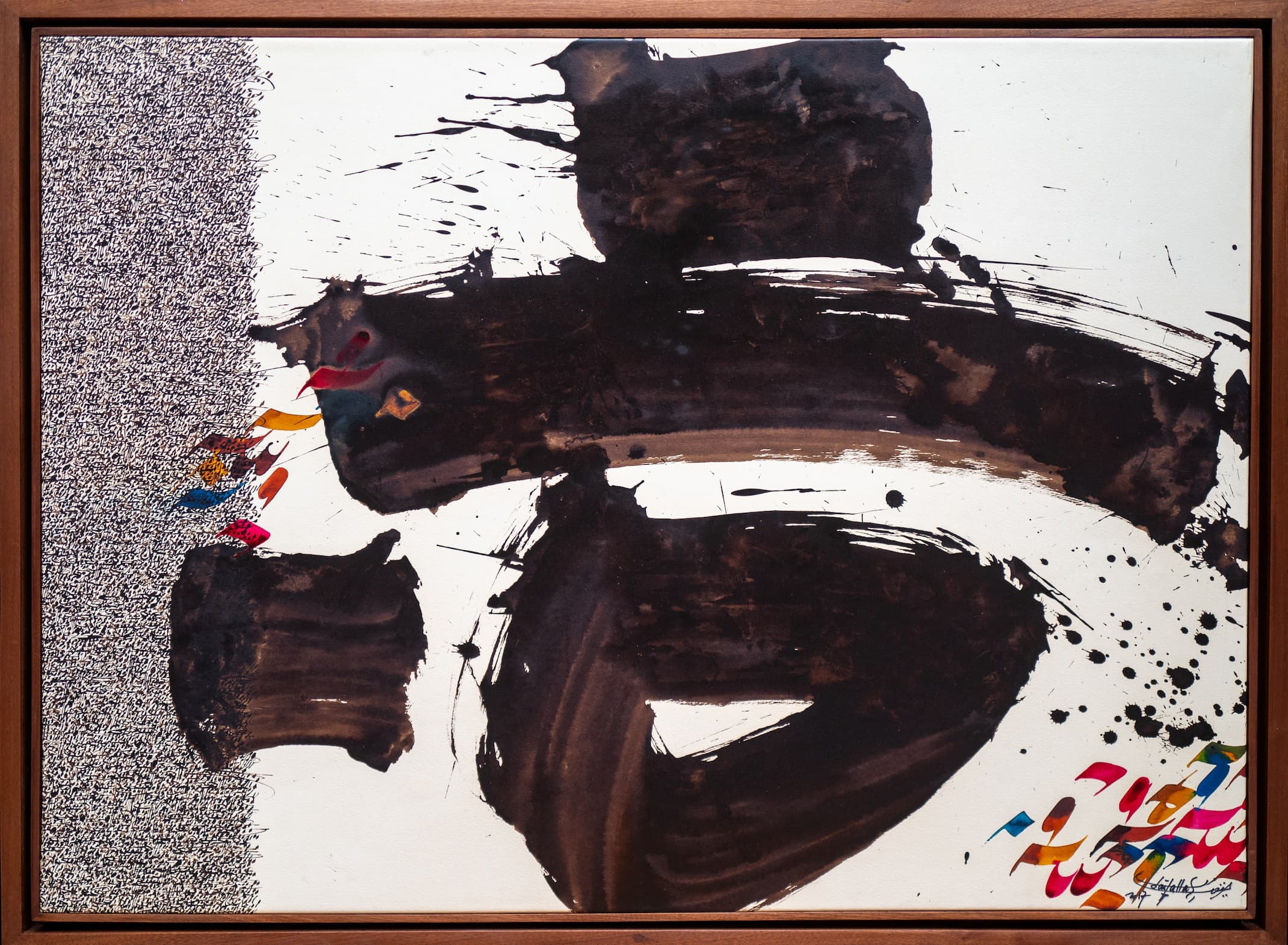


One need only to glance at the walls of Ben Youssef Madrasa or the Koutoubia Mosque to understand the sheer craftsmanship underpinning the ancient art of Moroccan calligraphy. Unlike the sharp, angular Kufic scripts of the East, the Maghrebi script of Marrakech is defined by its deep, rounded curves and graceful, sweeping tails. It is a script that mimics the curves of the Atlas Mountains and the circular flow of urban life in the city’s labyrinthine streets.
Plato called calligraphy a ‘geometry of the soul which manifests physically’ on account of its ongoing dance between expression and precision, and its potential to facilitate a powerful mind-body connection. Islamic calligraphy, in particular, began in the early 7th century, born from the reverence of the written word as a divine act. Over 1,400 years, it has evolved into numerous styles, and been used in architecture, coins, and art. Today, this inky art is being reimagined, thanks to the likes of cutting-edge creators like Noureddine Daifallah who keep the craft alive by shaping it for the future.
Daifallah’s work pushes the boundaries of the page, with letters that blur into rhythmic, abstract landscapes. His pieces are now held in prestigious permanent collections, including the Guggenheim and the Museum of Marrakech. We meet Noureddine Daifallah to discover more about how this sacred geometry is being carved into the modern identity of Marrakech.
In the world of Moroccan calligraphy, the tools are as sacred as the ink. To understand the art, you must first understand the materials that have remained unchanged for over a millennium.
The Qalam: Unlike mass-produced pens, a master’s qalam is made from reeds and can take up to four years to make. Once a reed is harvested, it is buried in horse manure — often for years at a time — until it hardens and darkens sufficiently. Once dug-up, it is sharpened with a razor at a precise oblique angle which dictates the width and flow of the script.
The Likka: Inside the inkwell lies the Likka, a cluster of raw silk threads. This humble tool serves a sophisticated dual purpose: it acts as a reservoir, ensuring the qalam picks up exactly enough ink to complete a stroke without dripping. In the dry heat of the Marrakech Medina, it also acts as a barrier, preventing the ink from evaporating or forming a crusty film.
The Paper: Traditional Moroccan calligraphy requires Ahar paper, which boasts a surface sealed with egg white and alum to prevent ink bleeding. This glossy, non-absorbent finish allows the qalam to glide effortlessly, giving the artist the unique ability to move or erase the ink before it sets.
You are known for bringing a modern touch to an ancient tradition. How do you decide when to follow the rules and when to break them?
For my part, I rely on the foundations of Arabic calligraphy, while looking for moments where innovation can open up new forms of expression. It all depends on the intention that I want to convey through each work. When I wish to express a more personal or contemporary idea, I allow myself to bend certain rules, while remaining faithful to the spirit and respect for tradition.
For a beginner holding a qalam for the first time, what is the most important lesson to learn about the relationship between the hand and the breath?
The most important thing is to feel the connection between the hand and the breath. Calligraphy is not only a technique, it is also a question of rhythm. The breath guides the movement of the hand and makes the gesture more fluid and natural. Doing some breathing exercises while moving the qalam can really help you gain ease and confidence.
Calligraphy has been called the ‘geometry of the soul.’ Can someone with no knowledge of the Arabic language still find meaning in the strokes?
Even without understanding Arabic, we can feel the beauty of the movement and the balance of the features. Calligraphy transmits emotion and visual harmony that speaks to everyone. It’s like a dance on paper, where each line carries an energy and a sensitivity that everyone can perceive.
How does the light or the red-hues of the city influence the specific colors and flows in your work?
Marrakech, with its warm colors and unique light, is a great source of inspiration for my work. The light creates plays of shadows and reflections which give a lot of depth to the colors. By integrating these elements, I try to capture the energy and soul of the city, and to visually translate its different atmospheres.
If a guest wanted to find the most beautiful examples of ancient calligraphy in Marrakech, where in the city would you send them?
I would recommend visiting the Medersa Ben Youssef, a true architectural gem and a magnificent example of traditional Moroccan art. Historic mosques and places like the Marrakech Museum also offer superb collections of ancient calligraphy.
As a guest of This Time Tomorrow, the artistic heritage of Marrakech is yours to explore with unparalleled access. Noureddine Daifallah occasionally hosts intimate sessions at his studio, curated exclusively through This Time Tomorrow. This is not a formal lesson, as such, but four hours of slow tea, deep philosophy, and ink-stained fingers — a rare chance to witness the evolution of Maghrebi script in its most private setting.
Feeling inspired? Explore our menu of exclusive local experiences, or discover our artful suites for your next cultural getaway.
Last modified: Fri, Mar 6, '26