Book a stay
Please choose your options...
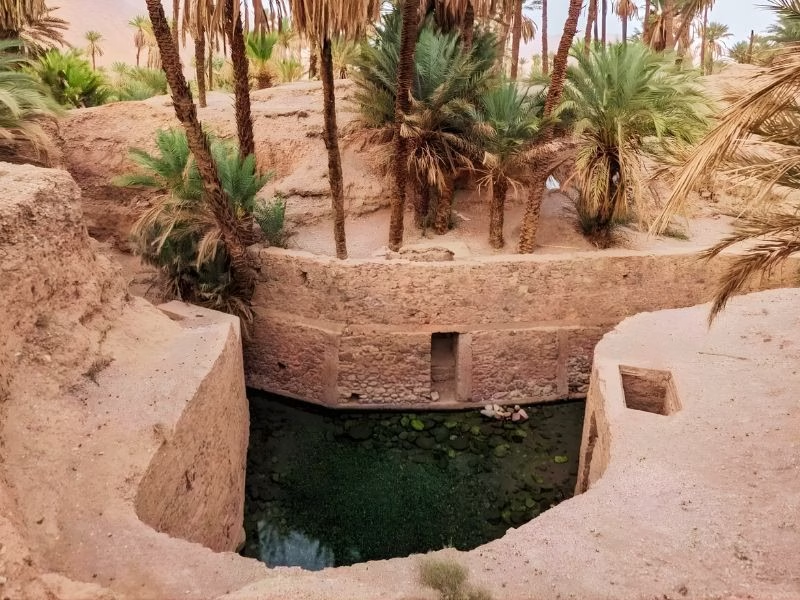
Marrakech was built in a place with almost no surface water — the story of the Khettaras, the ancient underground channels that have fed the city’s gardens and fountains for a thousand years, running beneath streets most people walk over every day without knowing it.
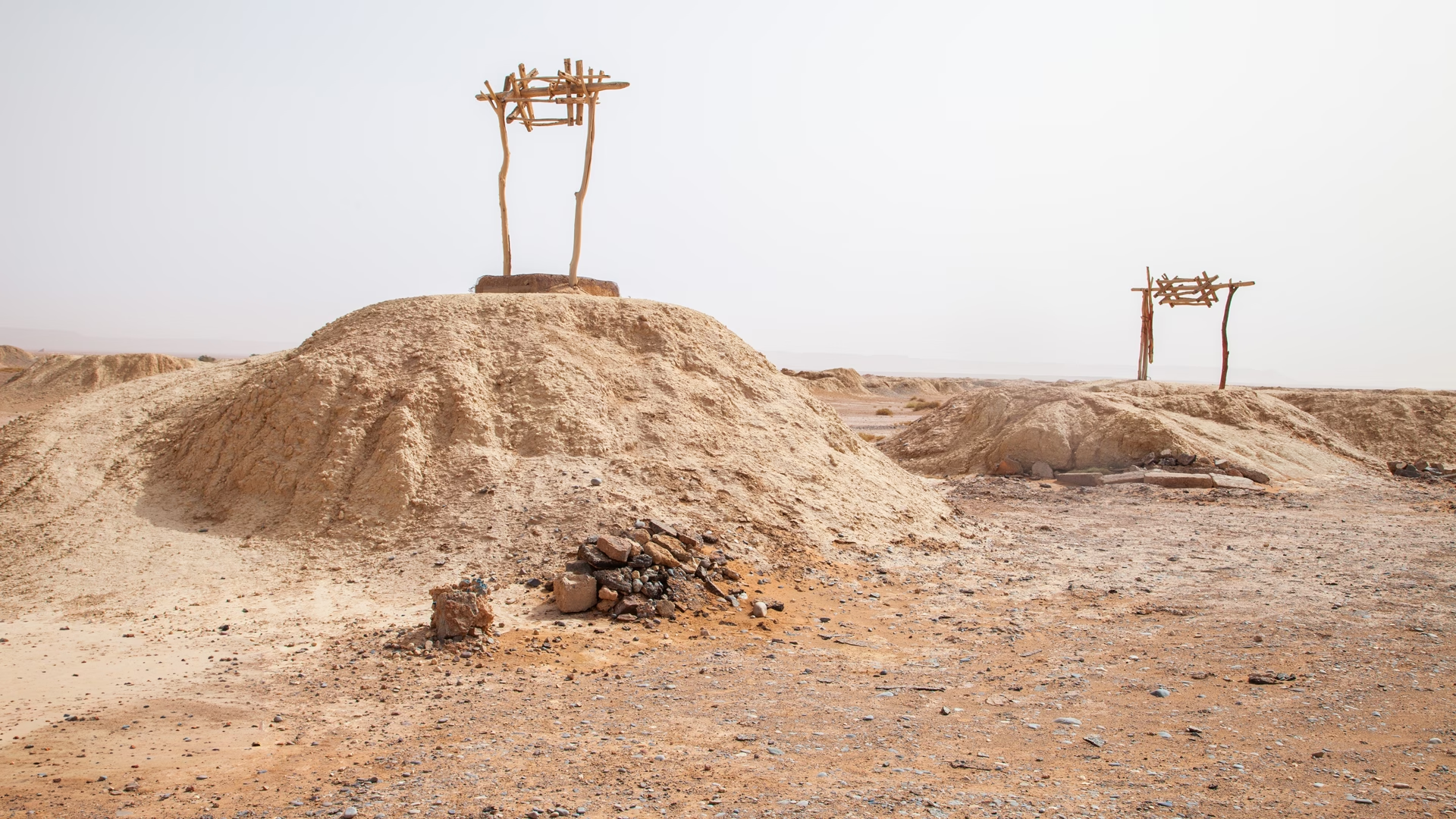
The khettaras are a network of underground tunnels, sometimes several kilometres long, that capture groundwater from the foothills of the High Atlas and carry it by gravity to the city below. The principle is simple and the execution is extraordinary: a mother well is sunk at the upper end, close to the water table near the mountains, and a gently sloping tunnel is dug toward the city, branching into distribution channels at the lower end. The water moves without pumps, without machinery, without electricity. It moves because the earth slopes, and because eleven centuries ago someone calculated the angle correctly.
Marrakech’s khettara network was built largely under the Almoravid dynasty in the eleventh century. At its peak it comprised hundreds of kilometres of channels running beneath the medina and its gardens, surfacing in fountains, hammams, drinking troughs and the great reflecting basins of the Menara and Agdal. The water that arrived in a riad courtyard fountain had travelled underground, through darkness and filtered earth, for anything between two and twenty kilometres.
The water that arrived in a riad courtyard had travelled underground through darkness and filtered earth for anything between two and twenty kilometres — arriving cold, clear, and entirely by gravity.
The system required constant maintenance — the tunnels cleared of silt, the channels inspected by craftsmen who understood the geometry of water underground. These were the khettara diggers, a guild with its own knowledge and its own language for describing what they found. That guild is largely gone. Parts of the network still function: the Agdal garden is still fed partly by underground water brought in this way. Youssef knows the Musée de l’Eau and can arrange a visit that puts the whole system in context.
Know the Story. Live a Chapter.
We publish a newsletter every month.
Share this story
Last modified: Tue, Oct 6, '26